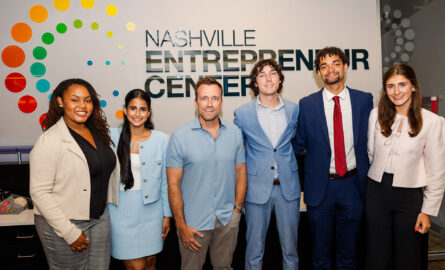
David Castro went to Coffee & Connections at the Nashville Entrepreneur Center in December. Four guys were already in the IceBrekr app before the event started.
“When we got to the event, it was like we were long-lost college buddies,” David says. “We’d already seen each other’s profiles, had a sense of what they did, had a great conversation. Didn’t talk the whole time. We pointed out other people to talk to. And then we said, hey, let’s grab lunch.”
They had lunch a month later. That’s Return on Interaction (ROI).

David built IceBrekr because networking events operate on hope. You hope you bump into the right person. You hope the random conversation leads somewhere. You hope you don’t waste 90 minutes on people who can’t help you and you can’t help them.
David loves serendipity. But he suggests that it’s a terrible strategy.
The Two-Keyword Rule
You’re attending Coffee & Connections: Tech & AI Edition on February 5th. You create your IceBrekr profile. LinkedIn integration saves time—it creates a simple profile for you from your professional profile.
Add two keywords maximum. Not three. Two.
“I usually say probably two is max, don’t do any more than three,” David says. “It’ll highlight and shuffle those profiles to the top of the discovery screen.”
Pick industry terms: “healthcare AI” or “B2B SaaS” or “early-stage investing.” The app shows everyone registered for the event. Profiles matching your keywords appear first.
Click on the filter icon and turn on “get notifications” under Match hints. “When that person walks in the room, it’ll buzz, and then you can look at the discovery screen and see and match the face and look at their profile.”
Your phone tells you when your ideal connection arrives. You approach with context. You already have some data to use as an icebreaker.
Message Before You Arrive
The pre-event window matters most.
“You can set up your whole conversations before you even show up,” David says, “because of the whole event PDA—pre-event, during event, after-event framework. So, pre-event, everybody’s in the discovery screen and you can take a look at the profiles and then star the ones that you want to talk to or even message them from within the app or via LinkedIn.”
Send three messages: “Saw you’re working on patient data interoperability. I’m building in that space. Would love to connect at Coffee & Connections.”
Two respond. You set a time—9:15 AM, near the coffee station. You walk in knowing who you’re looking for, what they look like, what you’re discussing.
No awkward small talk. No guessing if this random conversation might lead somewhere. You targeted three people. Two confirmed. You execute.
“That alone can help you have more ideal connections at the event than just going in traditionally blind and talking to as many people as possible,” David says.
The Mutual Interest Feature
You star someone’s profile. They star yours. The app notifies both of you.
“If they save your profile or star your profile, thinking that they want to connect with you, and you happen to do the same thing, it says, hey look, you both are interested in chatting,” Dave says. “Makes it very easy to approach and have a conversation.”
The mutual match removes the “did I read this situation right?” anxiety. You’re not guessing if they want to talk. You both already signaled interest.
Approach without awkwardness. They’re expecting you.

The Introvert Budget
Introverts operate on limited social energy. Small talk drains them. Approaching strangers cold feels excruciating. Walking into a room of 100 people knowing they’ll likely find a collaborative connection with just three—and having no idea which three—burns through that energy budget quickly.
“We definitely have a certain budget of time and energy at these events,” Dave says. “Time because the event begins and ends. And then the energy that is given of ourselves whenever we’re speaking to new people, strangers, looking to be thoughtful, polite, enter conversations, and then exit them politely.”
IceBrekr doesn’t force extroversion. It gives introverts the intel to conserve energy for conversations that actually matter.
You walk in knowing exactly who you’re looking for. You approach with confidence because you already know they match your interests. You exit conversations comfortably when you’ve exchanged value. You’re not hoping the next random person will help you justify the time and expense of attending this event.
“Not every connection is created equal,” David says. “There’ll be some in that room who align better industry-wise, insight-wise, career-wise with your goals. If you can connect with them before you leave, you can check the box. You’ll get your ROI on the event.”
The Serendipity Question
Doesn’t filtering kill valuable accidental connections?
“We’re 100% for serendipity,” David says. “No one will only talk to people who are matches in IceBrekr. While an ideal goal is definitely valuable face-to-face conversations with your ideal connections, then as always, just be a light, share your energy, talking with everyone at the event.”
The app enhances Return on Interaction. You still talk to everyone else. You just know which three conversations might deliver the most impact towards your ROI for attending.
If you don’t connect with your highlighted matches during the event, message them after. “You can just message them, say, hey, didn’t get to chat with you. I’d love to grab coffee, I’d love to do a Zoom, I’d love to connect with you on LinkedIn.”
Pre-event, during-event, after-event. The app extends the window for meaningful connection beyond the 90-minute event slot.
What TakeOff Taught Him
David joined the Nashville Entrepreneur Center’s TakeOff accelerator in 2024. Clay Banks taught go-to-market strategy, product messaging, pitch development.

“The EC’s TakeOff program was fantastic,” Dave says. “Very dense, learned things that are just real-world stuff. The messaging, the marketing was very good. I’ve implemented a bunch of the processes and thought processes around go-to-market, and product messaging.”
David built IceBrekr assuming more individual professionals would buy subscriptions. But they weren’t ready..
Event hosts were—membership organizations, trade groups, conference organizers. The people running the networking events that IceBrekr users would attend.
TakeOff forced him to answer: who is the best economic buyer to address this problem?
Event hosts have three stakeholders: attendees want meaningful connections, sponsors want leads, hosts want both groups to come back. IceBrekr solves all three with a matching mechanism that surfaces ideal connections for attendees and qualified leads for sponsors.
David pivoted from B2C to B2B. That shift happened because TakeOff taught him to find the real buyer.
Why the EC Uses It
The Nashville Entrepreneur Center now uses IceBrekr at their own events.
“The people at the EC are fantastic,” David says. “I have enjoyed every single person I’ve met or interacted with on the staff. I enjoy simply being a part of what the EC’s mission is, and collaborating to add value.”
The partnership delivers mutual value. The EC gets better event experiences for attendees. IceBrekr gets proof of concept with an audience that understands tech adoption. Dave tests features with real users in real environments.
“I think of the EC as a well of resources,” David says, “but also, you’re surrounded by a bunch of resourceful people. Resourcefulness is recognizing that resources are everywhere. You just gotta look to find them.”
February 5th
If you’re attending, create your IceBrekr profile before you show up. Add two keywords. Message three people. Walk in knowing who you’re looking for.
If you avoid networking events because they exhaust you, try this one. The app removes guesswork. You’ll know who’s worth your limited social energy before you walk in.
If you measure success in connections per hour, IceBrekr gives you intel to target the right people before arrival.
The Nashville Entrepreneur Center focused David Castro on the primary economic buyer. Now the EC uses his product at their own events.
About the author