Twenty-four Middle Tennessee companies. Four things the list tells you about who’s building here.
Charlie Jordan never made a pitch deck.
He had built VITL to seven-figure monthly revenue inside its first year, bootstrapped, and SignalFire came to him. The Series A closed at $7.5 million. Sixteen months in, more than 630 clinics and 1,000 prescribers run on his software.
Chelsea Moubarak got laid off from a tech job and decided, on a Friday, to go all in. She named the company after the day: Chelsea Friday Furniture. She drove moving trucks through the Midwest buying liquidated furniture, sold it out of her house, then out of nearly 20 storage units, then signed a lease on 3,600 square feet in East Nashville. Year one: six figures. Year two: more than three times that. Zero debt.
Both are 2026 NEXT Awards finalists. So are 22 other companies.
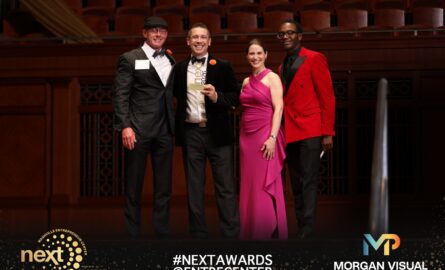
The NEXT Awards honor Middle Tennessee companies five years old or younger, run by founders still actively building, plus one individual, the Entrepreneur of 2026, whose work changed what’s possible here. Winners are announced Monday, October 19 at the Schermerhorn Symphony Center, the same night three founding teams are inducted into the Entrepreneurs’ Hall of Fame.
The full list of 24 is at the bottom of this page. But a list isn’t a story. Here are four things this class tells you that the list alone won’t.
1. Nashville runs American healthcare. It has never built the software company that runs it.
That’s the gap two finalists are pointed straight at.
Clear Health has processed more than 10 million claims since 2022. The platform sits across the entire revenue cycle: real-time patient estimates before care, upfront collection, underpayment detection while it’s still fixable instead of months later. Blake Stevenson and co-founder Kitty Cawiezell have raised $5.2 million pre-Series A and now serve more than 200 providers and facilities nationwide, with 60,000 patients served and a team of 19.
VITL is building the other half: e-prescribing infrastructure for cash-pay care. One interface connecting clinics to verified compounding pharmacies, with real-time price comparison and Amazon-style patient tracking. Jordan says out loud what most founders won’t. He’s building Nashville’s next homegrown unicorn.
The software bet in this class runs wider than healthcare. Jimmy Speyer moved his family to Nashville in 2022 for the specific purpose of building a software company here. GlassHouse launched in late 2024 and closed 2025 with 300 customers and growth of more than 2,000%, on a $3 million round led by Nashville Capital Network. Seven people, working out of Cool Springs. The product lets home-service businesses reach homeowners directly instead of paying what Speyer calls the Google tax.
Matthew Hertz reached break-even at Third Person in 18 months and now runs profitably, on track for roughly 6x revenue growth year over year in FY2026. The pitch is the NerdWallet for supply chain: an AI matchmaking platform pairing e-commerce brands with the right logistics providers.
And FlikTok is testing whether audiences should share in the value their own attention creates. Monica Brady, Evelyn Brady, Rebecca Eldridge and Douglas Cavanaugh have the app live on both the Apple App Store and Google Play with more than 1,000 early users: watch trailers, earn rewards, give studios verified engagement instead of guesswork.
2. A lot of this class said no to venture capital. It’s working.
Chelsea Williams founded Spark Branded Solutions in September 2022. Year one closed in seven figures. Year three closed in eight, nearly triple where it started.
Zero outside capital. The woman-owned branded-merchandise agency has won partnerships with AllianceBernstein, JE Dunn, and Nashville Soccer Club, been named a Best Place to Work in its industry two years running, and ranked #72 among more than 23,000 promotional products companies in the country.
Jasmine and Jed Chambers founded JASPER Builds in March 2020, the month everything closed, and finished year one profitable with a team of six. By 2022 and 2023, nearly 40% of the firm’s work was inside the Four Seasons Residences Nashville: 26 residence transformations, including a 5,000-square-foot penthouse. JASPER crossed eight-figure revenue in 2025. Next is a $5 million-plus estate on Arno Road, their first signature home.
Gina Sicilia started by posting recipes online, self-funded and alone. Gina’s Skinny Italian sells low-carb, high-fiber pasta and zero-added-sugar sauces. It was in all 50 states on Amazon within six months of launching e-commerce. It’s now in 28 Kroger stores, a growing set of Publix locations, and every Turnip Truck and Sperry’s Market in Middle Tennessee.
Chef V’s Alchemy of Food by The Flavorsmith went the other direction and landed a national retailer: a 2026 nationwide launch with Sprouts Farmers Market through its Innovation Set program, over 1,000 units in peak weeks, plus 40-plus independent retailers, 60-plus in-store demos, a USA Today feature, and showcases at Expo West and the Summer Fancy Food Show. The sauces are built on U.S. honey, maple syrup, and sorghum instead of refined sugar and seed oils.
The counterexample is instructive. Sonata Bank raised more than $40 million in capital, and used it. Wendell Bontrager and co-founder Farzin Ferdowsi grew loans 9.3x and deposits 8.5x between 2022 and 2025, reached $280 million in total assets, turned profitable, and finished 2025 #1 in loan growth among Tennessee banks and #1 in deposit growth among Nashville banks. A four-year-old bank does not usually lead the state.
Capital isn’t the variable. What you do after you get it is.
3. Who gets to build in Nashville is changing. This list is the evidence.
Cynthia Florez and her husband, Chef Marcio Florez, started with a food truck at the Nashville Farmers Market in 2016: The Inka Trailer, guided by Conexión Américas. Then COVID. Then partnership dissolutions that could have ended it. In January 2024 they opened Limo Peruvian Eatery. Today they employ 27 people, cook for disaster relief alongside World Central Kitchen, mentor immigrant entrepreneurs, and are scouting a second location.
Phyllis Poole started Lady Electrical Company in 2019 with her own savings, no business background, and 30 years of hands-on experience in a trade where women are still rare. She kept her full-time job while building it. The Tennessee Tribune covered her as a barrier-breaking female Master Electrician. Her first major project came as a subcontractor on the new Nissan Stadium, the Titans’ new home. She deliberately hires second-chance individuals, weighing skills and potential over past circumstances.
Yanet Rodriguez founded Link2LatinosBusiness in 2025 to connect Latino-owned businesses with the schools, organizations, and lenders that need them, and to break the language barrier standing in between. Two results from year one: a Mexican food truck landed an order for 1,000 burritos inside Nissan Stadium, and a tree-services company secured its first business loan ever, for $1.5 million.
Annika Baylis was 18 and a high school senior in 2020 when she started Prickly Pear Coffee Co. with an espresso machine and a folding table. The mobile cart became a brick-and-mortar in the Batman Building in 2023, a second location in 2024, and two coffee campers in 2025. Her framing: coffee is the vehicle, people are the mission.
Sharon Reynolds, a fifth-generation Nashvillian, holds 21 globally issued patents behind DevMar Manufacturing’s biohazard absorbent. She was the first woman-owned business to win a multi-year prime chemical contract at Nashville International Airport, and was inducted into the Enterprising Women Hall of Fame in 2026.
Two veterans made the list. Jayson Rivas started JHR Photography in 2018 while still on active duty; after Special Forces, he couldn’t hire fast enough, so he rebuilt the company on AI workflows and now operates in four markets with 5x revenue growth. Then he started teaching the playbook through TSBDC workshops and the Nashville Chamber’s AI Advisory Committee. Paul Whitten, a combat veteran and Peace Corps volunteer, has built Nashville Adventures into one of the city’s highest-rated tour companies: a 5.0 Google rating, 10-plus people on payroll, more than 100 corporate experiences for groups from West Point to Morgan Stanley, and 1% of revenue to veteran charities. He was a 2025 finalist. He’s back with a bigger company.
4. These founders are attacking Nashville’s own famous problems.
Housing cost. Aera Systems manufactures carbon-neutral homes from cross-laminated timber in a Berry Hill prototype facility, installs them in 30 days, and prices them against production builders. The homes use 80% less energy than a typical house. Justin Koziol and co-founders Taylor LaForge, Zach Grzybowski and Chuck King have built two prototypes and delivered a model home for Intunity, the first in a series of affordable homes for adults with intellectual and developmental disabilities, with an eight-home conservation community launching in Bellevue. A planned 40,000-square-foot facility would scale to 125 homes a year and 40-plus full-time jobs.
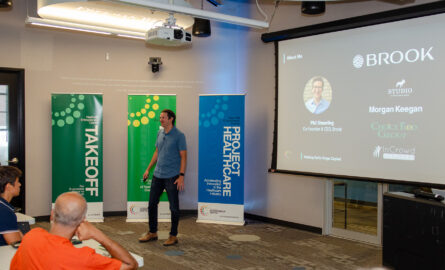
Childcare economics. Isebella Greathouse’s patent-pending cart attachment turns any stroller into a shopping cart. In under a year, Mommy’s Baby Buggy went from a single prototype to a Top 10 finalist in the EC’s Takeoff accelerator, a first investor, and a manufacturing partnership with Product Refinery. She also became a public voice on what childcare actually costs families, featured on News Channel 5 and hosting a Childcare Policy Forum at the EC with state leadership in the room.
Mental healthcare access. Most independent therapists wait months for insurance credentialing before they can see a paying client. Melisse Prusinski and co-founders Collins Hohne, Kalaway Voss and Olivia Blake built Watershed Wellness COOP so clinicians bill major insurers immediately. It’s worker-owned: therapy, bodywork and spa care under one roof in Madison, with surplus distributed across five stakeholder tiers and telehealth reaching clients statewide. Recognized at the 2025 Braintrust Pacesetters Awards for top revenue-growth percentage.
Live music’s booking chaos. Matthew Romero launched JamJuice in January 2025 and hit seven-figure annual recurring revenue by March 2026, 14 months in. The platform connects hospitality groups with live musicians across 10 markets in six states, on $650,000 raised including investment from LaunchTN.
Artists who can’t get paid. Taylor Ingraham’s Harmonize Artists Foundation is a 501(c)(3) developing independent musicians in the city that sells music. Two years, two showcase fundraisers, a third Artist Development Award winner now in progress, and monthly micro-grants next.
Kids who don’t read. Anna Skates ran book clubs free for years to build a name. When she started charging, enrollment tripled. The Department of Curious Things launched Big Little Stories Camp, an idea that sat in a notebook for seven years and is now in its second summer, and built a monthly programming partnership with The Factory at Franklin. A $5,000 friends-and-family raise is funding a bus conversion: The Field Unit, a rolling creative studio.
Entrepreneur of 2026 semifinalists
Four founders from the finalist field are in the running for the individual award recognizing lasting impact on the Middle Tennessee community:
- Charlie Jordan, VITL
- Cynthia Florez, Limo Peruvian Eatery
- Phyllis Poole, Lady Electrical Company
- Blake Stevenson, Clear Health
The full 2026 NEXT Awards finalist list
Business & Professional Services
- GlassHouse: Jimmy Speyer
- Sonata Bank: Wendell Bontrager, co-founder Farzin Ferdowsi
- Spark Branded Solutions: Chelsea Williams
Consumer Goods
- Alchemy of Food by The Flavorsmith: Vasisht “Chef V” Ramasubramanian
- Gina’s Skinny Italian: Gina Sicilia
- Mommy’s Baby Buggy: Isebella Greathouse
Healthcare & Life Sciences
- Clear Health: Blake Stevenson, co-founder Kitty Cawiezell
- VITL: Charlie Jordan
- Watershed Wellness COOP: Melisse Prusinski, co-founders Collins Hohne, Kalaway Voss & Olivia Blake
Music, Sports, Gaming & Entertainment
- FlikTok: Monica Brady, co-founders Evelyn Brady, Rebecca Eldridge & Douglas Cavanaugh
- JamJuice: Matthew Romero
- Nashville Adventures: Paul Whitten
Real Estate & Construction
- Aera Systems: Justin Koziol, co-founders Taylor LaForge, Zach Grzybowski & Chuck King
- JASPER Builds: Jasmine Chambers, co-founder Jed Chambers
- Lady Electrical Company LLC: Phyllis Poole
Restaurant & Retail
- Chelsea Friday Furniture: Chelsea Moubarak
- Limo Peruvian Eatery: Cynthia Florez, co-founder Chef Marcio Florez
- Prickly Pear Coffee Co.: Annika Baylis
Social Enterprise
- Harmonize Artists Foundation Limited: Taylor Ingraham
- Link2LatinosBusiness: Yanet Rodriguez
- The Department of Curious Things: Anna Skates
Technology & AI
- DevMar Manufacturing, LLC: Sharon Reynolds
- JHR Photography LLC: Jayson Rivas
- Third Person: Matthew Hertz
The spotlight on Nashville business legends
The Entrepreneurs’ Hall of Fame is the highest recognition the EC gives, for founders whose companies changed what this city is.
This year the EC inducts three founding teams.
Rob McCabe and Terry Turner walked out of First American in October 1999 after AmSouth bought the $20 billion Nashville bank they’d spent three decades climbing. Ten months later, with eleven other Nashvillians, they opened Pinnacle Financial Partners. Today it holds roughly $117 billion in assets.
Max and Ben Goldberg opened a velvet-curtain cocktail bar on Tax Day 2009, in a Nashville that had no craft-cocktail bar. Strategic Hospitality now operates every Michelin-starred restaurant in Tennessee: Bastion, The Catbird Seat, Locust. It makes its chefs equity partners in the rooms they cook in.
Don and Tracy Hardin started their construction firm in 2000 out of Tennessee State University’s business incubator. You have been inside their buildings: Music City Center, First Horizon Park, the National Museum of African American Music, the international arrivals building at BNA. On Music City Center, Don’s team hit 30% minority subcontractor participation on a project most firms couldn’t get to ten.
Between them, they built the bank, the buildings, and the restaurants that turned Nashville into a national city.
Join us
The 2026 NEXT Awards and Entrepreneurs’ Hall of Fame is Monday, October 19, 5:30 to 9 p.m., at the Schermerhorn Symphony Center, 1 Symphony Place.
Twenty-four finalists. Eight category winners. One Entrepreneur of 2026. Three founding teams inducted into the Hall of Fame.
About the author