 Last fall, a pop-up burger shop opened in Manhattan called the Hard Stop Burger Shop. The burgers were free. The line wrapped the block. But it wasn’t really about burgers.
It was Zoom’s launch event for Zoom Mate, produced with the experiential agency Verb. The insight underneath it was simple: millennial workers don’t take their lunch, but Zoom Mate gives you that time back. So take it.
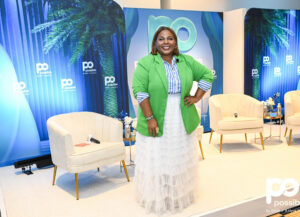
Tiffany Hardin’s agency, Gild Creative Group, was hired to discover, cast, and manage the creator content and relationships. And she’s no stranger to this work — she started Gild in 2011, when creator marketing was still extremely new.
For this project, Tiffany’s team cast in two lanes: creator archetypes who could drive attendees to the pop-up, and creators who could speak credibly about how Zoom intersects with their own work, so the same talent could actually eat lunch and have a frictionless workday.
The agency negotiated content usage and collab posts up front, which meant Zoom got a long tail out of the same relationships. The numbers came in over the following weeks: more than a million views, over 3,000 link clicks, and 123 posts across platforms — working with fewer than 10 creators and no boosted or paid posts.
“Anybody can pay for views. Anybody can pay for lift,” Tiffany says. “But when you’re able to do it naturally and organically, I think that’s a testament to good strategy.”
A Moment of Truth
Tiffany cut her teeth at talent management firm Violator before discovering her love for marketing at Steve Stoute’s agency, Translation, working on brands like Bud Light Platinum, Lime-a-Rita, Bing, and Target. During her time there, she was a part of the inaugural social team led by Marcus Collins — now a University of Michigan- Ross School professor and one of the most respected voices in cultural marketing.
Creator marketing in 2011 wasn’t an industry yet, so it was a hard sell for brands who weren’t sure how to navigate the space internally to dedicate marketing or media dollars. It was still “experimental.” So she quietly started Gild on the side, working with talent on brand partnerships and plotting her next moves for a burgeoning industry.
In one of her reviews, Marcus looked her in the eye and asked: “Tiffany, why aren’t you doing what you want to be doing?”
“That stuck to my bones like white on rice,” she says. “It forced me to ask the question — who am I being loyal to, and why am I not doing what I want to do?”
She left not long after. Twenty-seven years old, in New York, in a category that barely existed. Her first client was Mother Agency, working on a project for Microsoft where Solange was curator for an event during Fashion Week — SZA, Dapper Dan, and Beyoncé showed up.
No Means Nothing
“I’ve never been afraid of no. It’s so funny how in my professional life, if I hear a no, I give it no charge. I’m like, all right, next.”
It’s hard to believe now, but pitching brands on the power of creator content in their funnel was not easy as brands perceived it as a risky investment. The early pitches got the answer she expected — curiosity and interest, but slow to sign scopes and retainers. They’d buy social media management. They’d buy PR. They wouldn’t buy what she was actually selling until their peers were doing it.
So she did the work that would get her in the door, and quietly built creator strategy underneath it. “I would sneak creator marketing into some of the more traditional things that we would do,” she says. Over time she pulled back on the wrappers. She didn’t want to be known as the social media shop or the PR shop. She wanted to be known for the creator strategy underneath.
Small Decisions — Big Money
Early on, in her twenties, Gild had started as a solopreneur freelance shop. But when Tiffany moved to Nashville, and got serious about growth, she put effort into operations to position her boutique agency to support enterprise clients — from hiring to payroll, insurance, and developing an SOP for every aspect of performing the work.
And, the year Tiffany was nominated for a NEXT Award, Gild tripled its revenue because of her intentional effort, and two key decisions.
The first: no new contracts under $10,000. The second: no more mom-and-pop clients.
She was used to working with major brands like WeWork and Airbnb, so she needed to shore up her team and processes to win Enterprise business. Since that time, she’s seen her business grow to almost 7-figures, and she’s worked to bring creator programs to life for Rocket Mortgage, Zoom, Hulu, and more.
Finding Your People
Tiffany moved to Nashville from a 12-year tenure in New York City because “God told her to” in 2019. She landed in Lebanon, Tennessee first, staying with her parents, and then, unexpectedly, her mom passed in 2020. Her mother was the first entrepreneur Tiffany ever knew who created her own lane — a self-taught software analyst, which over the years landed her very lucrative contracts in health tech. Her mother was an avid supporter of women in entrepreneurship, so it’s no surprise that Tiffany found herself meeting others who shared her mother’s values, including Sherry Deutschmann, who runs Braintrust, and encouraged Tiffany to apply for a NEXT Award.
In 2021, she sat at a stacked finalist table in the Music, Sports & Entertainment category next to Kath Carter — who was running the women’s program at the EC at the time — and Hal Kato, the then-CEO of Thistle Farms. Her dad was at the table with her. Spoiler: She didn’t win… yet.
“I absolutely expect to win a NEXT Award at some time in the future,” she says. “But I knew that I found my people.”
That’s the line. Not I won. Not I networked. I found my people. A founder who’d just left New York for a state she didn’t know, sitting in a room of other Nashville operators, deciding this is where she belonged.
What every founder gets wrong about creators
Most brands don’t have product problems anymore. They have credibility problems. Creators close that gap — but only if the brand has done the work of figuring out which story it’s borrowing the creator’s credibility to tell.
As a creator marketing expert, Tiffany is encouraging every founder to stop working with creators before you know what story you want them to tell and what business outcome is most meaningful to your funnel.
“The idea of using creator content as simply a media channel for you to drive a business outcome is the weakest way in which you can actually activate that creator and that creator’s audience.”
The point isn’t just impressions. The point is trust. Creators are a brand’s fast track into consumer trust, not just visibility. And, according to Tiffany, creator programs aren’t one size fits all, so if you’re just starting, create moments creators want to go to or participate in, and start building relationships first.
Tiffany has paid millions out to creators and realized: creators need more support. Only 12% of creators make it to 6-figures. So she started Represent, a creator platform and fellowship to help growing creators scale their small business with tech-enabled tools and an expert marketplace. The platform is still a prototype; the selective fellowship is in its 3rd cohort, 8 weeks of curriculum, mentor access, and complimentary Ampersand membership for a year.
Tiffany believes that “Nashville isn’t just music city. It’s creator city.” It’s the reason the city proclaimed September 5th Creator Day, on the heels of the inaugural Nashville Creator Summit she started last year — 200 creators, brands, and marketers, sponsored by Shopify and Nielsen. Recently, she received $250,000 in non-dilutive funds to prove the model out.
The 2nd annual Nashville Creator Summit happens September 10th at Ampersand Studios on Music Row — 200 seats, opening keynote from Tiffany on what’s next for creators, 1:1 expert marketplace sessions, fireside chats, and a creator pitch. Early bird tickets ($125 for creators, $250 VIP) are live at onrepresent.com/creator-summit through August 7.
Her Zoom relationship keeps deepening in parallel. Beyond the Hard Stop Burger Shop, Tiffany is standing up the Zoombassador Program with the Zoom team — a six-month cohort of 15 creator-entrepreneurs who show the world how they actually run their businesses on Zoom, in exchange for tools, paid opportunities, coaching, and access to Zoom leadership. It’s the kind of long-arc partnership Tiffany has been arguing for since 2011: creator work that builds trust over time, not campaigns that treat creators as a media channel.
Last month she took the pitch to the Croisette. Tiffany spent Cannes Lions as a counselor with Sprout Social, facilitated a private breakfast for “creatorpreneurs” with Whitney Magnuson of Zoom, joined an Adcolor and Microsoft panel on AI and creative entrepreneurship alongside Microsoft CCO Nicole Leverich, and sat on a Salon Conversations panel on creator monetization with Beehiiv CEO Tyler Denk and Cloudflare CEO Matthew Prince. The goal between the panels was simple: find the mission-aligned brands, partners, and investors who want more “middle-class” creators to build sustainable careers — and lock in sponsors for the Nashville Creator Summit in September.
Mission accomplished.
The invitation
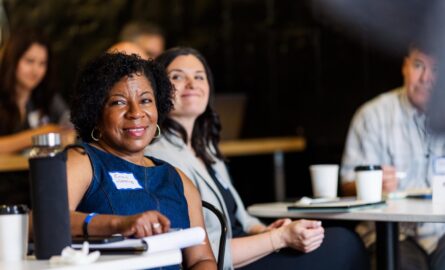
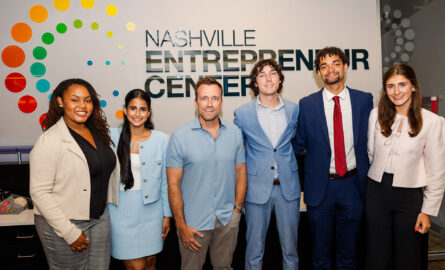
Tiffany found her people at the EC as a member. If you’re the founder on the other side of that table, membership is open at ec.co/membership.
Gild Creative Group · gildcreativegroup.com
Nashville Creator Summit — Sept 10 · onrepresent.com/creator-summit
Zoombassador Program · zoom.com/en/resources/zoomahead/zoombassadors
The NEXT Awards 2026 · ec.co/next-awards
Become an EC member · ec.co/membership
About the author