Mail came at afternoon formation. Nobody got released for chow until it did.
That was Korea, March 1988 to March 1989. Alpha Company, 2nd Battalion 72nd Armor. Tarak Robbana was a PFC.
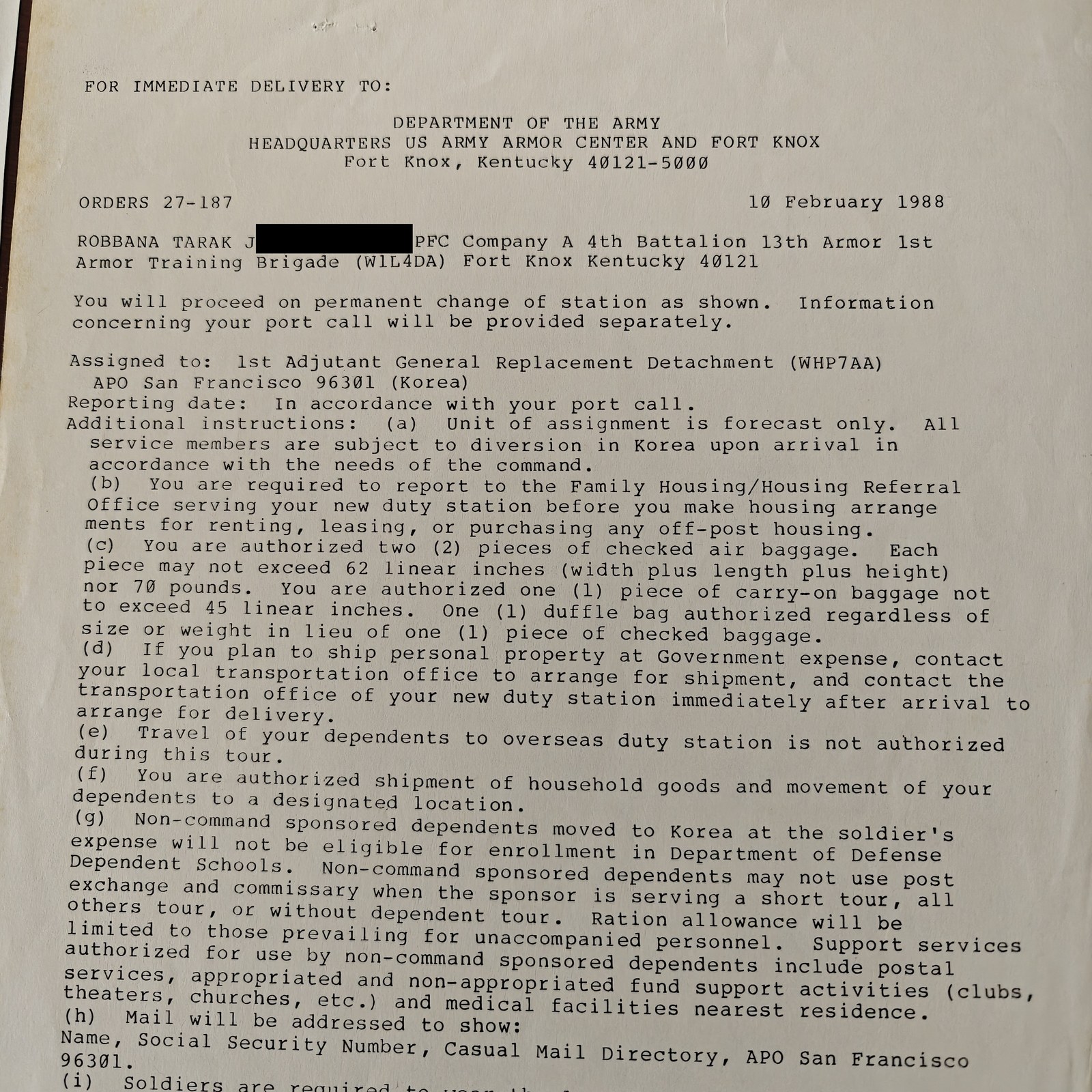
Out in the field, mail got handed to your platoon sergeant or your tank commander. One letter reached him in an ajumma’s tent, the Korean woman who followed the company out, made ramen, sold cookies and pops.
The letter was perfumed. It was from a girl named Emily F.
He read it in the tank and kept it in his BDUs.
“It made the 365 days I was there in Korea go by much better.”

Thirty-seven years later, Robbana is building a business based on that feeling. The people who feel it are a financial advisor’s clients and their families. The person who has to buy it is the advisor.
His company is VerbaPost. An advisor uploads a list of prospects. VerbaPost mails each one an invitation to record a family story, calls the people who say yes, and mails the story back on linen paper to someone they love, with the advisor’s name on it. Then the advisor follows up, and it isn’t a cold call anymore.
Last Friday, Robbana sat down with a list of 26 advisors to call.
He made one.
What his mother taught him
The first version of VerbaPost was different. It was a vending machine for spoken word. Talk into it, get mail out, sold straight to consumers.
His mother was the first tester. She’s 83 and lives in Portland.
It was tedious. There were forms. There was data entry.
“My poor mother,” he says. “She suffered through it.”
She got a few stories recorded. He got something more useful: understanding what works and what doesn’t.
Seniors don’t want an app. They don’t want to call in, they want to be called. Don’t make them type anything.
Everything VerbaPost does now comes out of watching his mom struggle with the version that didn’t work. Nobody has to learn anything. Someone calls you, you talk for a few minutes, and a letter shows up at your daughter’s house.
He still hasn’t captured most of her stories. She worked for USAID in Tunisia, which is where she met his father. She protested in the sixties. She went to the University of Oregon and knew one of the Merry Pranksters.
“I can’t wait to get my mom’s stories.”
The part that isn’t the product
Robbana has built things professionally for years. He’s stood in front of executives at PacifiCorp and Metro One and pitched. He knows how to do this.
He has talked to two certified financial planners about VerbaPost.
The first one asked why she couldn’t just use her voice recorder. She never opened the website.
“I didn’t really have my pitch down,” he says. He worked out afterward that his concept was never getting him through compliance anyway.
The second one he mailed a letter, then called to follow up. She hadn’t seen it. He asked for a few minutes of her time. She was skeptical, and eventually she told him they don’t need new business.
“It doesn’t feel good. Rejection doesn’t feel good.”
Then, immediately: “But each time I’ve been rejected, on every case, I’ve gotten good feedback. Something I’ve learned from every single person. So that’s the advantage.”
Both of those are true at the same time. Which is how you end up making one call out of 26.
Building got easy. This didn’t.
Robbana built VerbaPost the way a lot of people are building things right now. The idea came from walking the greenways and wanting to record his voice and turn it into a letter for his mom. He started with Gemini and a stack of screenshots pasted into a chat window.
Then he announced it on LinkedIn.
“Half the people that visited, the site was down.”
He’s better at it now. Using Claude Code, several models, constant iteration, GitHub, automated tests before he commits, his own QA on top. He’ll also tell you that whatever you learn about these tools this month will be out of date next month.
None of it taught him how to make call number two.
He knows exactly what he needs to ask
This is the part that’s easy to miss about him.
Robbana has a list of questions. How do advisors actually get new clients today? Has this one ever run a seminar dinner or a direct mail campaign, and what did it really cost? Who approves a purchase at a mid-sized RIA? Does a third-party gift have to clear compliance? Is there a marketing budget, and how big is it?
He isn’t confused about what he needs to know. He needs someone to ask.
So he enrolled in PreFlight at Nashville Entrepreneur Center. Zero revenue, zero customers, zero employees, and he paid tuition so he could get questions answered.
That’s the signal worth paying attention to. Anyone can build the thing now. Building it has stopped being evidence of anything. With PreFlight, he can find out quickly whether he should.
We’ll see
Robbana is 57. He’s retiring. He has a portfolio. He has sat in one of those steak dinner seminars as the prospect, watched the room, and counted how few people in it were ever going to sign.
He thought he could do better than that. He may be right.
“I think I have a better solution.”
Then, after a beat: “Uh, yeah. We’ll see.”
That’s where he actually is. Not certain, not quitting. One call in.
EC built an accelerator for founders who think they have a better solution and want to find out quickly. Apply to PreFlight
And if you’re a certified financial planner or an estate attorney, Tarak is looking for three advisors to pilot VerbaPost free with a handful of their clients. You can see exactly what a client would get at app.verbapost.com/a/demo, which places a real call to your own number. Email rob.williams@ec.co and I’ll put you two together.
About the author