
Paul Whitten was in makeup school on graduation day.
Not because his grades were bad—they were fine, not great, but fine. The problem was attendance. He’d skipped so much school senior year that he didn’t have the hours to graduate.
His Spanish teacher, Senora B (name withheld because she bent the rules), was supervising makeup classes that day. She had a form in front of her. If she signed it, Paul could walk. If she didn’t, he’d be in summer school while his classmates moved on.
She pulled him aside.
“What’s the next step for you?”
Paul told her the truth. He was joining the army. That was the plan. That’s what he had to do.
Senora B looked at him. “You’re a nice guy. You’re a blast. You’re fun. You’re not an [expletive]. You’re just lazy.”

Then she signed the form.
“I will let you graduate,” she told him. “But you have got to join the army and reform yourself.”
Paul’s almost 40 now. He runs Nashville Adventures, a tour company that won TN GM of the Year and Hitmaker of the Year in 2025. He donates 1% of revenue to veteran causes. And he just launched a scholarship for kids who look like he did at 18.
He still remembers that conversation with Senora B.
“If she did not sign that, I would have had to go to summer school,” Paul says. “I wouldn’t have been able to join the army, or it would’ve been delayed. And who knows if I would actually join? That could have been a pivot moment in my life.”
The 15-Year Detour
Paul’s resume looks impressive on paper. Army Combat Arms in Afghanistan. UK Parliamentary Fellow. Peace Corps volunteer in Armenia. Amazon project manager.

He’ll tell you the truth about it: “The reason why my resume looks like that is I had no idea what the [expletive] I wanted to do for the rest of my life.”
He loved the army, but Afghanistan changed him. He won’t go deep into it, but he’ll say this: “Afghanistan really messed me up. I was in a different headspace after Afghanistan.”
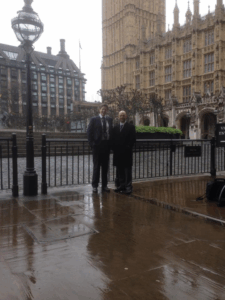
After injuries ended his military career, he landed a fellowship at the UK Parliament. Poor kid from Tennessee with a Southern accent walking the Palace of Westminster, meeting lords and members of Parliament, carrying a pass that let him go anywhere without being searched.
Then the political party he worked for got caught in a scandal. Paul wasn’t involved, but he was burned by proximity. He left.
“I was not happy with that either,” Paul says. “So I decided to do something completely different.”
The complete opposite of wartime Combat Arms army? Peace Corps.
He spent two and a half years in Gavar, Armenia. Showed up not knowing any Armenian. By the time he left, he was teaching classes in the language.
“The best skills training for entrepreneurship that exists is Peace Corps,” Paul says. “You join Peace Corps, you ain’t got no team. You ain’t got no budget. They drop you in the middle of this village and they say, ‘We want to do stuff like this, but figure that [expletive] out. Good luck.'”
Paul loved it. He was making his own teams, finding money from USAID, from the Japanese embassy, from anyone who’d listen. “There was not a hand that I was not willing to shake or a baby I was not willing to kiss to get what we needed.”
After Peace Corps, he went to Amazon. “Amazon damn near killed me,” he says. But it taught him how to manage, how to handle budgets, how to deal with stakeholders. “That was my MBA. A real crash course in extreme business methodologies.”
Each stop shaped him. Afghanistan taught him he could handle the worst days of his life. UK Parliament taught him he belonged in any room he walked into. Peace Corps taught him he could figure things out anywhere in the world. Amazon taught him what money was and how to manage it.

At 38, Paul realized something: “I can just create my own job.”
He’d always loved history. He’d been a volunteer tour guide at Fort Knox after his injury. So he started Nashville Adventures in 2022.
The $250K Conversation
Paul had never taken a business class in his life when he joined the Nashville Entrepreneur Center’s InFlight program.
About a month in, he was talking to Johnny Anderson between modules. Just a casual conversation about corporate events. Paul wanted to break into that market but wasn’t landing deals.
He was pitching event planners—companies bringing employees to Nashville or entertaining clients as part of a sales process. The tours were good, but something wasn’t connecting.
Johnny told him: “Learn their goals, challenges, and even their terminology and connect with it.”
They were in the Unique Value Proposition segment of InFlight. Johnny pushed him further: learn the UVP of the companies you’re calling on, then tie it into your proposals.
“Understanding what makes his prospect different was the biggest differentiator he could show for his company,” Johnny says. “He wasn’t just a great option for a killer tour of Nashville, he also understood their businesses and tied it into the tour.”
Paul went back and started doing exactly that. Before every corporate pitch, he’d research the company. What made them different? What were they trying to accomplish with this event? What language did they use internally?
Then he’d build the proposal around that understanding. Not just “here’s a great Nashville tour”—but “here’s how this tour connects to what makes your company work.”
“That conversation has probably led to about a quarter of a million dollars in revenue that we’ve made since InFlight ended,” Paul says. “And InFlight ended eight months ago.”
That’s what happened: Johnny Anderson said something in passing, Paul implemented it, and it generated $250,000.
“That’s what’s really good about it,” Paul says. “I’m in the Nashville Entrepreneur Center. If I had to say what is my favorite organization that I’m a part of, and I’m part of a lot of them, NEC is my favorite.”
It’s not the curriculum, though that matters. It’s the room. The people in it. The casual conversations between modules that change your business.
“There’s so many transformational interactions just like this,” Johnny says, “where conversations are being had between EC volunteers, mentors, and their peers in the cohort.”
The Scholarship
Paul just launched the Nashville Adventures Community Leadership Scholarship. $750. One Tennessee senior or current college student per year. Not based on GPA or test scores.
“I’m looking for a kid who basically was what I was,” Paul says. “That kid who has potential, who hasn’t realized it yet. The kid who is a nice kid, who wants to do great things for the world, but just hasn’t learned how to focus yet.”
The kid every other scholarship will overlook.
Paul saw the Metro Nashville Public Schools Academies of Nashville
pitch competition, where students compete for real money and exposure to entrepreneurship. The Nashville Entrepreneur Center is paying for three months of coworking time at the EC for the winner. Paul’s paying for another three months.
“I love that stuff,” Paul says. “I had no idea that existed until my mid-30s. And what this does is it allows a kid to know it earlier.”
He’s not naive about it. Most 19-year-olds won’t start a business right away. But the seed gets planted. It germinates later, maybe at 25 or 26, after college.
“If we can ensure a kid is aware of this and can make decisions based off it in his 20s, instead of the old-fashioned way, which is stumbling on videos on YouTube or finally seeing enough success of entrepreneurs online—that’s what this provides,” Paul says.
Paul thinks Metro Schools is doing something special with the academy programs. “A lot of these charter schools ain’t got nothing like the MNPS Academy system,” he says. “This is a major variable in the equation of what makes the Metro Nashville Public School system really special.”
The scholarship reflects what Paul learned: you can’t judge people by data points. Not GPA. Not test scores. Not the metrics that look good on paper.
“Everyone’s circumstance is 50% luck,” Paul says. “And no one should be judged by their circumstances. Everyone’s either lucky or still seeking that opportunity.”
The Nashville Model
Nashville Adventures won awards in 2025—TN GM of the Year, Hitmaker of the Year, NEXT Awards finalist. Paul, honored as a 2026 40 Under 40 winner, thinks the awards confirm something about Nashville, not about him.
“When I tell people we’re the best of Nashville because we represent the best of Nashville values, to me, these awards represent the fact that I was not wrong,” Paul says. “Nashville is as special as I thought it was.”
He points to Thomas Ryman, who owned Wharf Point on Broadway and used the profits to build the Ryman Auditorium. That’s the Nashville model: make money, give back, build something that lasts.
“Nashville embraces anyone who comes down here with a desire to make this city better,” Paul says. “And that is what makes it exceptional. Nashville Adventures is just representing what Nashville already is.”

Paul donates 1% of Nashville Adventures’ revenue to veteran charities. The scholarship is the next step. Giving back isn’t marketing—it’s continuation of what the city already does.
“The army made me who I am today,” Paul says. “And I was far from a stellar soldier. But the pillars and foundations of the man I became occurred in the army. One of my favorite stories is, I said something stupid and I had to carry a plant around me to replace the oxygen I was wasting. That’s a reality check. You have to earn the right to be heard in the room. You aren’t given it. And I think that’s a healthy thing young people should learn.”
Paul’s been running Nashville Adventures for three years. The company hires veterans, leads tours with people who actually care about Nashville’s history, and gives back to the community that embraced him.
The awards didn’t change the business. They just confirmed the model works.
“This is who we are,” Paul says. “Whatever awards we get, it’s just reinforcement.”
The Straw That Breaks
Paul wants this scholarship to be what Senora B was for him. The person who breaks the rules. The person who signs the form they shouldn’t sign. The person who sees something in a kid that the data doesn’t show.
“I want this scholarship to be the straw that broke the camel’s back regarding complacency and laziness for a young man or woman,” Paul says. “I want this to be an enabling factor for greatness.”
He’s not looking for the perfect student. He’s looking for the kid who reminds him of himself. The one who’s trying but not there yet. The one who needs a nudge.
“Your time to shine is coming,” Paul says. “Do not be defined by your performance in high school. This is a brand new slate. This is your tabula rasa moment. This is your time to shine as you define it.”
$750. One student. One chance.
“I turned out halfway decent,” Paul says. “And I turned out that way by people analyzing metrics other than a GPA.”
Senora B told him: “You’re not an [expletive], you’re just lazy.”
Twenty-two years later, Paul has proved her right and he isn’t lazy either.
About the author