 Danny Glushenkov is flying from Tel Aviv to Nashville this week. His company, Project M, builds causal AI for real-time clinical decisions — not just predicting what might happen to a patient, but prescribing what to do about it. The team ran retrospective studies at Duke and Mass General Brigham. Co-founder Ahuva Weiss Meilik led clinical data strategy at Sheba Medical Center, one of the top hospitals in the world.
Glushenkov could have gone anywhere. He chose to spend 12 weeks with the Nashville Entrepreneur Center.
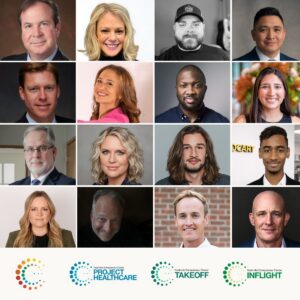
On Wednesday, Katsiga and 87 other founders begin the EC’s Spring 2026 accelerator programs. Seventy-one companies across three tracks — Project Healthcare, TakeOff, and InFlight — each built for a different stage of the entrepreneurial journey.
That matters for Nashville. And not in the way you might expect.
The Numbers Behind the Room
The surface-level stats tell one story: 60% first-time founders. Nine veteran-owned companies. 37% women-owned. 44% led by founders of color. Six international founders from six countries. Over 20 companies already generating revenue.
Those numbers are worth noting. But the more interesting number is 71 — that’s 71 companies building products and services. Some that solve problems their founders lived through firsthand.
Jota Low is a medical student who watched his Spanish-speaking mother struggle to navigate the American healthcare system. He built Centro Health Solutions to create culturally responsive referral technology. He already attended one EC program. He’s back for a second.
Megan Cales is a single mother and full-time university staff member in Chattanooga. She was sitting at Thanksgiving dinner watching her partner’s five-year-old autistic son struggle to control his voice in a noisy room. She searched for something that could help. Nothing existed. So she built it — a wristband called the Brooks Band that vibrates when a child’s voice exceeds a preset level, with a companion app for caregivers to customize settings. Twelve schools and therapy centers in Chattanooga and Knoxville have already expressed interest. She came to Nashville specifically because the city’s healthcare ecosystem can accelerate clinical validation beyond what her home region can offer.
That last sentence is the one Nashville should pay attention to.
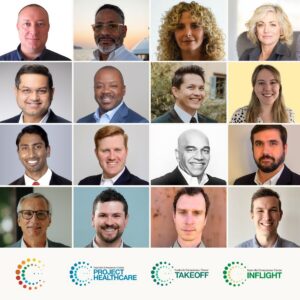
Why Nashville, and Why It Matters
The traditional argument for entrepreneurial ecosystems is jobs. Startups create jobs. Jobs create tax revenue. Tax revenue funds services. This is the truth, but not the whole truth.
The more compelling argument is this: when 88 founders from different industries, backgrounds, and geographies choose to build their companies in the same city, they create something harder to quantify and harder to replicate. They create density.
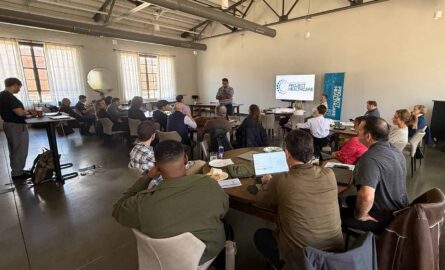
Consider who’s in the room on Wednesday morning.
John Siedlecki spent 40 years in healthcare leadership and led a subsidiary spin-off that resulted in a successful acquisition. He’s building a medical device that replaces the most dangerous task nurses perform every shift — moving patients from bed to toilet to shower.
With him at Pinewood for the afternoon session, Kyle Hocking has spent 15 years moving medical technologies from concept through clinical validation. His company, VoluMetrix, has a non-invasive venous waveform monitoring device with over 3,000 patients in clinical studies. He’s closing a Series A while navigating the FDA pathway.
And in the Learning Center for the TakeOff kickoff, Katherine Mead — a former high school chemistry teacher who went through Teach For America in Nashville during COVID, then got a Georgetown data science master’s — is piloting an AI lesson planning tool that cuts teacher prep from 70 to 90 minutes down to under 15. She’s working with a Nashville charter school.
These companies don’t compete with each other. But the people building them will eat lunch together, compare notes on fundraising, and meet a Baker Donelson lawyer who actually returns calls. That’s what an ecosystem produces. Not a program. A community.
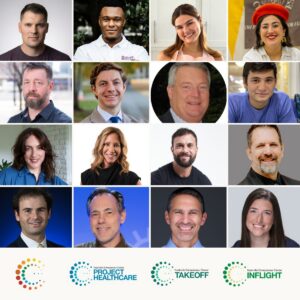
The Healthcare Track
Nashville has always been a healthcare city. HCA. Vanderbilt. The corridor of health IT companies along West End. The Spring 2026 Project Healthcare cohort is 22 companies with 35 founders deep, and the companies read like a survey of what’s broken in American healthcare and who’s building the fix.
Andrew Hogue, a Caltech grad and former Headspace product leader, burned out. Then he built a burnout relief app. NEUROFIT has Harvard-validated efficacy, and Hogue came to Nashville with three specific targets already identified: C-suite contacts at Ascension Saint Thomas, HCA, and Lifepoint.
Othman Ouenes is a second-time founder — his first healthcare startup was acquired. A former firefighter and Stanford grad, he’s now building Fidari, an AI platform that coordinates cancer care for community oncology clinics. Eighty-five percent of cancer patients get treated at these clinics. Most health AI ignores them.
Bryan Davis and his four Nashville co-founders have 100-plus combined years in healthcare. They spotted a bottleneck nobody talks about: hospital committees can spend up to 40 hours researching a single medical device before approving it. Their AI, VACScore, does it in a fraction of the time. They say they have no competitors.
Dustin Crouch holds a PhD from Virginia Tech-Wake Forest and is an associate professor of biomedical engineering at UT-Knoxville. His company, EndoLimb, is building a fully implanted prosthetic limb that sits inside the bone, attaches to the patient’s own muscles for control, and is covered by living skin. The proof-of-concept studies were funded by NIH and NSF. They’re starting with an engineered opposable thumb.
This is the Project Healthcare cohort. Five of its companies are part of a new partnership between the EC and Life Science Tennessee to help commercialize technologies across the state – accelerating lab to market growth.
The Veterans
Nine veteran-owned companies are in this cohort, and their stories refuse to fit a single narrative.
Sarah Bellenger is a 20-year military veteran and Army Nurse Corps officer who was credentialed over 20 times across military and hospital settings. She built Manage You — the credentialing management platform she wished had existed — because the administrative chaos kept pulling her team away from patients.
Christian Perez was born in Guatemala. He became a Green Beret. SF Medic. Earned a Bronze Star in Afghanistan. Wrote a book. Then earned seven AWS certifications in nine months, founded the AWS User Group in Clarksville, and built Altivum as a Public Benefit Corporation. He’s already shipped two products and has more client demand than he can personally fulfill.
Jessika Cunningham was born in Brazil. Came to the U.S. through the Au Pair program in 2016. Married an Army soldier. Enlisted herself. Now she’s building 5th Haven with her husband Zackary, a premium cachaça brand with double organic certification and full QR-code traceability from Brazil’s Atlantic Forest.
David Jung is from Seoul. This is his third medical AI startup. His first company went public in Korea. Now he’s using multimodal AI to predict heart failure readmission at Nashville hospitals.

The First-Time Founders
Sixty percent of the companies in this cohort are led by first-time founders. That’s not a weakness. That’s the pipeline. That’s the opportunity.
Jimmy Lowery Jr. grew up in a mobile home. Both parents worked two jobs. Free school lunches. Despite the adversity he faced, he became student body president, first in his family to graduate college, co-founded a startup out of school, and is now building Simplora — end-to-end agentic meeting intelligence for modern teams.
Justin Crandall taught himself construction from Google searches and used books from McKay’s. Built a permit expediting business over nearly a decade. He came to the EC because, in his words, he doesn’t know what he doesn’t know.
Brahja Heger is a single mother and a teacher. She built KinGo Safe, a ride-share app with car seats, wheelchair accessibility, and enhanced background checks. Designed for women, families, and people with disabilities. It’s the rideshare that nobody else will build.
Adison Fields is a Nashville native, Vanderbilt economics grad, who grew up watching her dad build a business. She has food allergies, lives vegan, and started baking because the allergy-friendly custom cake market barely exists. Every cake at Adi Rose Bakery is made to order.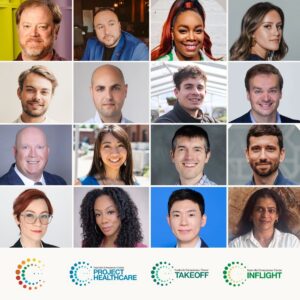
What Happens Next
On Wednesday morning, these 88 founders will be in the same building. Some will spend 12 weeks refining a product. Some will land their first customer. Some will pivot. All will get the support they need to succeed.
That’s the point. The EC doesn’t promise outcomes. It provides the room, the curriculum, the volunteer advisors, and the side conversations that happen between modules. What each founder does with that is up to them.
The Spring 2026 cohort starts February 25.
The Nashville Entrepreneur Center’s accelerator programs — Project Healthcare, TakeOff, and InFlight — serve founders at every stage. To learn more or apply for a future cohort, visit ec.co/accelerators
About the author